Do you ever look up at the sky and decide that it definitely won’t rain, only to be caught in a downpour? Apart from being angry with yourself, you probably also wonder how weather forecasters can predict everything. Today, we’ll explain all the secrets of the weather, and at the end, we’ll test your knowledge with a quiz. Are you ready to see how much of a meteorologist you are? Let’s get started!
Meteorology is a strange, difficult word describing a specific field of science that combines knowledge from both geography and physics. Geography here refers to the area of the earth or atmosphere that is subject to observation and research. Physics explains exactly what processes take place there. By understanding these processes, people are able to predict various things, including the weather.
Sounds clever, so who came up with it first? Although weather forecasters have been providing their services for hundreds of years, true professional meteorology was born quite late. Have you ever heard of FitzRoy? I’m not talking about the river, but a certain captain and admiral.
We owe him a lot, because this guy from Great Britain was the first to come up with the idea of something like a weather forecast. He wanted the information that sailors needed to pay attention to in order to travel safely to reach the general public as well. He noticed that warning people about rain and storms, and even cheering them up with the prospect of sunny weather ahead, would have a positive impact on society. And that’s exactly how it is!
Are you good at other sciences too? Test your knowledge in our Physics Quiz!
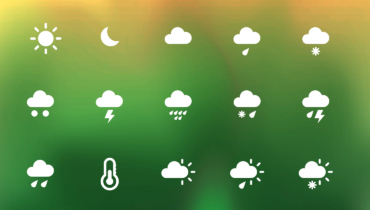
You already know what meteorology is, but how exactly do these people do it? How do they predict that it will be sunny tomorrow or that strong winds will pick up in the afternoon? It’s not that simple; it’s not enough to just look at the sky. To predict conditions accurately, you need to observe, record, and analyze data all the time. But don’t worry, they are well prepared for this! See how and why meteorologists measure specific things.
First of all, it is necessary to measure the temperature… practically all the time! Meteorologists record the temperature every minute! However, they don’t do this manually with a watch in their hands. Special devices are responsible for this, which automatically record the data. It’s very convenient! Thanks to this, analysts can observe how quickly the air temperature changes from morning to night.
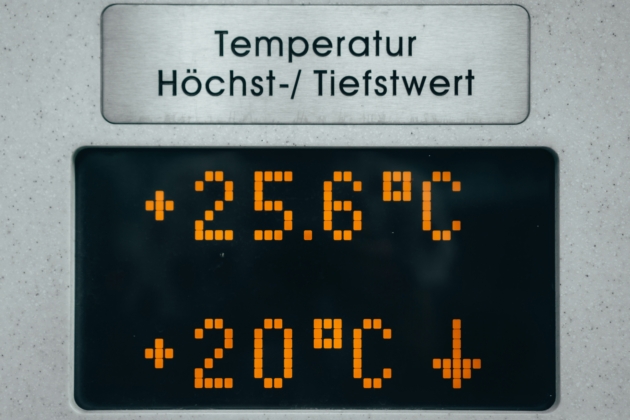
They also notice any deviations from the norm that may indicate rain, storms, wind, fog, or other atmospheric phenomena, as the temperature changes in a specific way in such cases. By observing these measurements, they can give us important signals about possible future frosts or heat waves. And it’s better to be prepared for that! You will know how to dress and whether to get ready to clear snow off your car before work!
In addition to temperature, specialists also measure how much water is in the air. Why? Well, it’s very important! People noticed long ago that vapor occurs naturally in the Earth’s atmosphere. And thanks to its measurements, we can predict a lot, because the water cycle in nature is a series of different processes that meteorologists know very well.
It is humidity that best predicts rain, because when there is so much water in the air and clouds that there is nowhere to store it, condensation begins. On the other hand, when this indicator remains low for an increasingly long period of time, droughts can be predicted. It is therefore very important not only for ordinary people, but also for farmers!
Today, a Weather Quiz awaits you, but check out other cool things on our website too. For example, the Animal Challenge! Can you recognize all kinds of species?
What else does every good meteorologist need to measure? Pressure! Not blood pressure, although that’s also important because it’s good to monitor his health, but atmospheric pressure. It turns out that there are various physical forces at work around us that we cannot see, but which are very important. All this pressure is caused by masses of air moving freely, sometimes mixing or colliding with each other. It’s amazing that we discovered this at all, since it’s not visible to the naked eye!
But that’s how it is, and it helps a lot in predicting the weather. A drop in this indicator usually means that plans have to be canceled due to bad weather. Weather forecasters then announce sudden changes in the weather on television, including storms, winds, and precipitation. We may also feel worse in general. As the pressure rises, conditions begin to stabilize and we can plan outdoor activities, knowing that it will probably be sunny. But this also comes with extremes in the form of drought and unpleasant heat. Why can’t the weather always be perfect?
You can predict that it will be windy, but you also need to observe the wind if you want to be a good meteorologist. First of all, they must pay attention to which direction the wind is blowing, as well as how strongly and quickly the air is moving. This is very important, but do you know why? Well, the wind carries not only leaves and paper bags, but also heat and moisture.
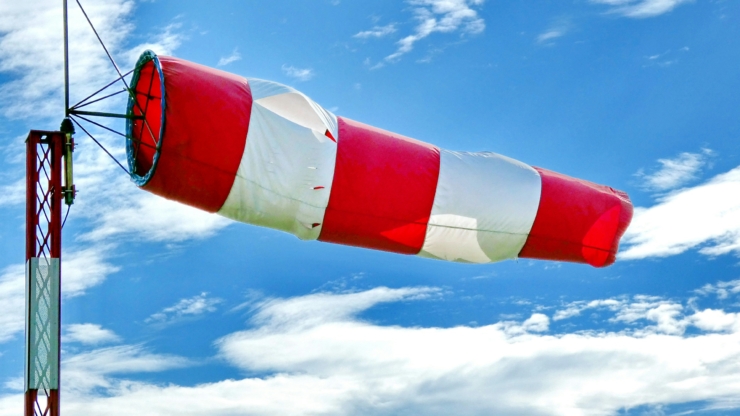
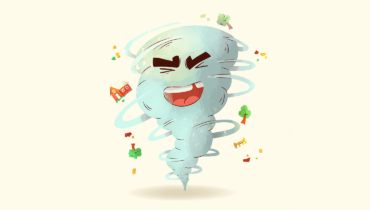
You can then prepare for upcoming rains, and even hurricanes and tornadoes. Yes, it’s better to know that such a threat is coming! What’s more, information about the wind is also important for pilots so that they can safely rise into the sky and land. For those who are afraid of flying – don’t worry! They have specialists who, thanks to special anemometers, can predict everything well!
For many people, weather forecasting is mainly associated with observing clouds. Meteorologists gaze at the sky like dreamers. But instead of imagining whether a cloud resembles a puppy or a kitten, they analyze its structure. What’s more, using special tools, they also measure its density and height in the sky. Yes, it’s possible!
This gives them a lot of important weather information, such as the fact that it will definitely rain from a given cloud. They can distinguish between clouds that cause sudden but short-lived rain and those that will ruin your plans for the whole week with prolonged rainfall. That is why these white clouds resembling cotton candy are a very good sign for every meteorologist and more!

Okay, we’ve given you a quick weather refresher. But if you want to get the best score on our quiz, you may need to prepare even more! In our quiz, the difficulty of the questions increases gradually, so the last ones can be quite challenging, touching on serious topics in meteorology. If you’re an expert, you’ll do great! And if not… maybe you’ll learn something? Either way, it’s worth it, so take the Weather Quiz now!
And if you prefer other challenges, we also have a Synonyms Quiz! Interested?