Are you a fan of solving logic puzzles, such as rebuses? If so, this is a very beneficial hobby for you! Thinking about such tasks stimulates the brain, improving its performance. Rebuses require a good vocabulary and abstract thinking skills. It is therefore worth practicing regularly to become smarter and smarter.And it’s great fun! So don’t wait and get our Rebus Puzzles. We have twenty of them!
And if you’d prefer something else, why not test your sports knowledge in our Basketball Quiz?
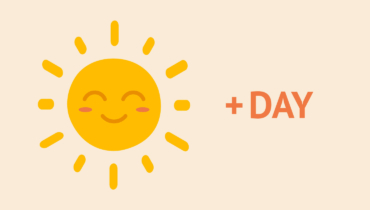
If you have never encountered this type of puzzle before, don’t worry, we will explain everything to you. Rebuses are interesting tasks in which your goal is to guess a word or phrase. You have to do this based on pictures and clues about adding or removing a few letters. For example, we have a picture of a hat, so the beginning of the solution to the puzzle appears in our head. Then we see the word “chet” next to the picture. By combining these two words, we get a handy one-handed tool, which is a hatchet. See? It’s pretty simple.

The problem starts when such puzzles use pictures of objects with different meanings. A hat is pretty obvious, but what if you see blue drops? Is it the word drops, water, or maybe rain? You have to figure it out by combining them one by one with other clues in the puzzle. Based on these rules, rebuses can be challenging, encouraging your mind to be constantly stimulated. And this has nothing but benefits! Read on and see for yourself how much you can gain from solving rebuses.
Well, first of all, rebus puzzles are a lot of fun. Take our quiz and see for yourself, you might get hooked! What’s more, solving them is very beneficial for the human brain, significantly developing cognitive functions. Let’s take a closer look at exactly how.
To solve a difficult rebus, we need to have a fairly good vocabulary. Identifying what is depicted in the picture can be challenging, as the words may have different meanings or a specific context to be discovered. But thanks to your associations, you can arrive at the correct answer and expand your vocabulary. In addition, you develop your language skills, as puzzles force you to divide words into syllables or letters. This teaches you to analyze a problem by breaking it down into smaller parts. It’s a simple technique that teaches you a lot!
And if you want to improve your vocabulary even more, take our Synonyms Quiz! It will definitely help you!
By thinking intensively about a rebus, you also learn a logical approach to problems. What does this mean? It means that your thinking process itself will become more effective. Rebuses operate on specific patterns that you learn to recognize. They require careful analysis of information and organization of thoughts. This allows you to draw conclusions more efficiently and understand complex cause-and-effect relations. Simply put, you start thinking like a real detective, developing your deduction skills.
What else can a rebus give you? Better perceptiveness! Do you tend to forget everything because you are absent-minded, and can even overlook something that is right in front of your eyes? All is not lost, you can get better at it! One way to do this is through rebuses, especially difficult ones with non-obvious images. Sometimes we have to see something specific in them to solve the puzzle. This requires you to focus on the details, which improves your observation skills and ensures that nothing will escape your attention in the future!

Rebuses are interesting puzzles that require the stimulation of various centers in the brain. Not only those responsible for careful analysis, but also those responsible for vivid imagination. That’s right, a rebus can stimulate your mind and improve your creativity. Associating images or symbols with syllables is nothing more than using unconventional thinking.
The solution to the puzzle is not immediately given to us in the form of letters; we have to figure it out using our imagination, what is hidden behind the graphics and how to translate it into language. This requires a flexible approach to the situation, the ability to connect elements, and understand ambiguous content. Thanks to this, in the future you will have a more creative approach to problems, being able to find not the simplest solutions, but unconventional and innovative ones. You will definitely find this useful!
Although rebuses are not poems to be memorized, they can also develop your memory. To guess the answer, you have to arrange the letters in your head, which requires a certain amount of memory. Of course, you can also write it down if the rebus is particularly difficult. But we recommend exercising as many areas of your brain as possible, relying solely on your thoughts. Thanks to active thinking, your memory will definitely improve, and you will never forget your mother’s birthday or other important matters again!
Rebus puzzles can have different levels of difficulty. For children, of course, the easier ones are recommended, so that they can draw conclusions and learn new words and letters based on simple images. Those for adults require some knowledge and good association of facts. They may contain complicated words, and the solutions are usually not simple phrases, but sayings, proverbs, or aphorisms.

In our quiz, we have focused on versatility so that both children and adults can enjoy it. It contains simple puzzles that stimulate the mind. But beware! The difficulty level increases with each question! We start with ones with a single image and then add more elements. This makes it a good challenge for everyone.
Are you ready? You now know that puzzles can bring many benefits, improving your logical thinking, creativity, memory, and much more. So it’s worth giving them a try. Regularly solving puzzles helps children develop mentally, making them smarter and better equipped to cope with adulthood. It’s not too late for adults to learn either, as by frequently stimulating their brains, they can protect themselves from memory problems in old age and diseases such as dementia. You can see for yourself that it’s worth taking on the challenge!
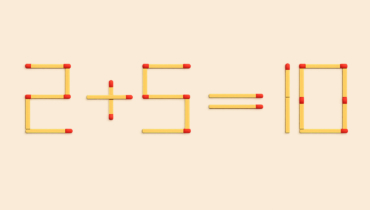
Another cool brain teaser that will make you smarter is Matchstick Puzzles. Be sure to check them out too!