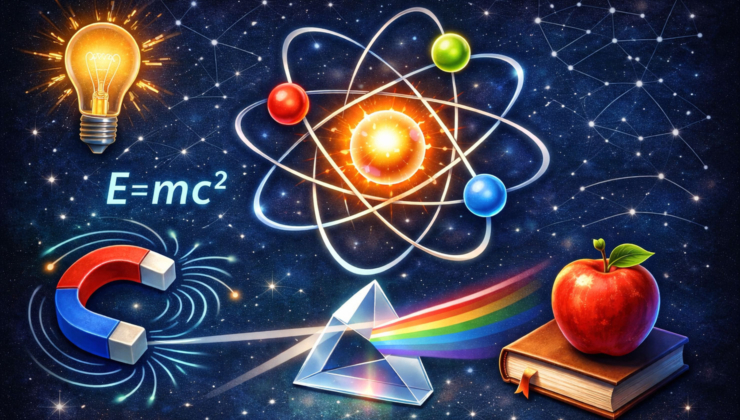
Physics can discourage many with its difficult formulas, calculations, and theories, but there is no denying that it is one of the most important fields of science. It concerns everything that happens around us and within us, describing motion, sound, heat, and many other fundamental things.
Thanks to this, we can understand exactly how the world works. Do you want to test your knowledge in this field? Check out our quiz!
Or maybe you prefer biology and nature? On our website, you will also find many tests about animals, such as the Birds Quiz!
Knowledge of physics is useful not only at school. It has many benefits, including developing the ability to think in terms of cause and effect and to solve problems logically, which is useful in everyday life.
It gives you the tools to analyze any situation. It helps you understand why a boat floats, how a refrigerator works, and what happens in space. You discover fundamental knowledge about the entire universe, which is amazing!
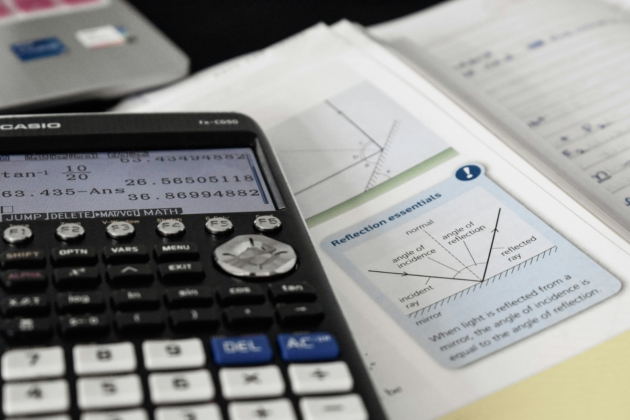
Learning physics can also be useful in building a career path. This science is useful in many industries, such as research centers, technology companies, the energy industry, construction engineering, and mechanics. These well-paid, modern professions require an analytical approach, which physics teaches.
The motivation to study physics lies in the people who have significantly advanced this field, made extraordinary discoveries that changed the world, and went down in history. It is worth appreciating their work, as we benefit from their scientific achievements every day. See what physics has given us.
Probably everyone knows this man. Newton made a significant contribution to the world of physics. He developed the fundamental laws and theories that are still used today.
Thanks to his work, we were able to describe the motion of planets in physical terms in order to better understand it. These laws are also used to analyze everyday mechanical phenomena, which is useful in technology and other industries.
Another man associated with the world of science is Albert Einstein. He became an icon of intelligence thanks to, among other things, his development of the theory of relativity.
It was a revolutionary discovery that allowed us to understand what time and space are, as well as the relationship between mass and energy, symbolized by the well-known equation E=mc². Thanks to Einstein’s work, various technologies have been developed, such as GPS. Much more is also known about space, including black holes.
This Hungarian-American scientist earned the nickname “Queen of the Sun” thanks to her work. Her experiments proved that the sun can be used to produce energy, including heat.
She created a solar-powered oven, and her discovery led to the development of modern construction methods, advanced space suits, and improvements in electric car batteries. What’s more, she also constructed a simple device for producing drinking water from seawater, saving hundreds of lives during the war.
This extremely intelligent man specialized not only in physics but also in chemistry. Thanks to his enthusiasm for science, he contributed to great discoveries related to electricity. It is thanks to him that we have generators and transformers, which power many of the devices we use every day.
Are you interested in technology and gadgets? See if you can recognize devices from the past! Check out our Old Items Quiz.
Physics is a science that changes the world, making life easier, advancing medicine, and allowing us to explore space. It is therefore worth learning physics, because you may be the one to make an incredible discovery! So take a look at the basics of this field of science. Get ready for our quiz in just a few minutes!
One of the most important concepts in physics is motion and force, which can be easily observed around us. A body, i.e., an object or creature, can be at rest, move at a constant speed, or be subject to an external force.
Simply put, you remain at rest when sitting motionless, you use your strength when you stand up, and an external force can be, for example, the impact of the movement of the car you are traveling in, which causes you to sway when cornering.

But it is also worth clarifying that rest and motion depend on some things. To a person sitting in a car, you are at rest, but to a person standing on the sidewalk, you are moving with the car!
Therefore, various forces act on a person, causing acceleration or keeping them in motion, which, according to the second principle, depends on force and mass. The third principle reminds us that every action causes a reaction, which is rather easy to understand.
Another important concept in physics that you need to know is energy. Remember that it does not disappear or arise from nothing! This is explained by the law of conservation of energy, which states that energy only changes its form, e.g., by transforming into heat or electrical energy.
When learning theory, we usually start with kinetic and potential energy. The former is related to the motion of a body, which you already know a little about thanks to Newton.
This energy can be calculated by taking into account that the faster something moves, the greater its mass and, consequently, the greater its kinetic energy. Such calculations are useful in many industries, for example, when designing brakes for vehicles or wind and water turbines.
Potential energy, on the other hand, is needed to build power plants, satellites, water towers, and even ordinary things like slides in children’s playgrounds. It is calculated taking into account the fact that it depends on the height at which something is located, the mass of that thing, and the acceleration due to gravity, which is always the same.
Thermodynamics is another important part of physics that you need to learn about. Simply put, it is the science of heat and its transformations, which is important in the manufacture of engines, furnaces, and refrigerators.
Several principles have been developed in this field, including the zeroth law of thermodynamics, which states that different systems are in thermal equilibrium with each other. But wait, what does that even mean? It’s simple! That’s just how a thermometer works. When you put it on your body, it takes your temperature.
Then we have the first law, which indicates equilibrium, or again, that energy does not increase or decrease but transforms into heat equal to it.
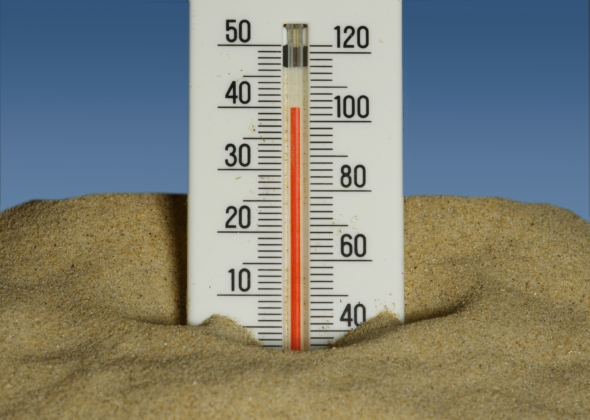
In the second law, we learn what entropy is, which measures dispersed energy. This can also be explained with an example from everyday life. Imagine a cup of hot coffee in a cool room. Heat transfers from the coffee to the environment, that’s obvious. Is there a moment when the coffee says stop and leaves some heat for itself? No! It will continue to do so until the temperature equalizes, that is, until the forgotten drink cools down and you no longer want to drink it.
What can we learn from this? That this process occurs spontaneously and in one direction. You will never see a situation where a cold room suddenly heats up tea!
There is a third rule that applies to low temperatures, namely that it is impossible to reach absolute zero, i.e., a state of complete cessation of heat transfer. Okay, you probably know everything now, so take the quiz!
Take a look at our other challenges, such as the Synonym Test!