In the 2000s and earlier, artificial intelligence was mainly associated with science fiction films, robots, and a futuristic vision of the world. Today, it is widely known and has become part of our everyday lives. People use AI often without even realizing it. It has various practical applications and often serves entertainment and creative functions. However, not everyone is convinced about it.
Artificial intelligence is increasingly able to copy people and our world. Sometimes it is really hard to tell if something is generated or real. Can you tell the difference, or are you easily fooled by artificial intelligence? Find out in today’s quiz!
You will also find other interesting things on our website, such as the Animal Recognition Quiz!
Artificial intelligence is simply a computer program, i.e., a set of algorithms and mathematical models, designed to perform specific tasks and functions. Recently, its development has been growing at an incredibly fast pace.
It can already possess skills such as learning, image and word recognition, decision making, searching, and data analysis. Modern programs are usually based on machine learning, which means that they do not need specific code built step by step. They learn on their own based on the experiences and data they receive, and they also make decisions and interpret information on their own.
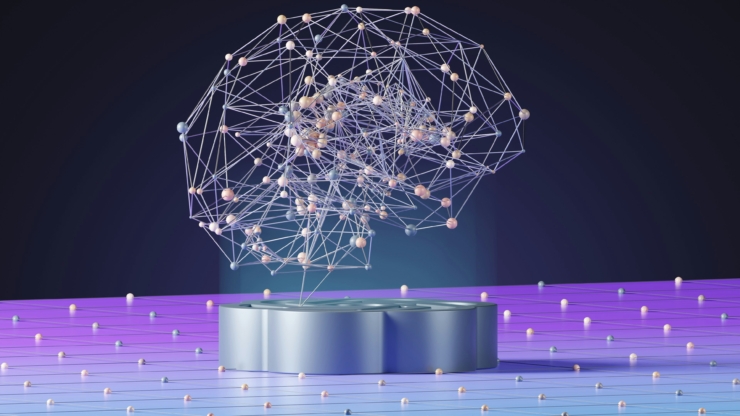
An even more advanced form is deep learning, inspired by the structure of the human brain. It aims to operate in a similarly intelligent way to us, hence the name AI. However, it is still a long way from achieving this, and it is not known whether true digital intelligence is even possible.
It is also worth noting that although artificial intelligence sounds very serious, it cannot replace humans. It has no consciousness and does not understand the world the way we do. It specializes in specific tasks and operates within specific rules and data, lacking the depth, emotions, and other characteristics that distinguish humans from robots.
AI is everywhere now, but where did it all start? Well, the history goes back much further than we think, even before the advent of modern computers. The idea itself was already present in ancient times! There were concepts of creating thinking machines that could replace human labor.
However, the real scientific foundations began to take shape much later. The year 1956 is considered the symbolic beginning of artificial intelligence. It was then, during a conference, that American computer scientist John McCarthy first used the term. AI was born then as a separate field of research.
Scientists were very optimistic and committed. After all, artificial intelligence has always been a source of wonder. The idea that we would share our lives with robots in the future appeared in various cultural sources, such as The Jetsons cartoon.
So people strove to achieve this by creating the first programs capable of playing card games and chess and solving simple tasks. At the time, it seemed that a life like in The Jetsons was entirely possible in the near future.
However, the matter turned out to be much more complicated. Computers at that time had limited computing power, which significantly slowed down the development of artificial intelligence. It was necessary to wait for the development of technology, which, fortunately, was also progressing at a significant pace.
But at the beginning of the 21st century, a breakthrough finally came! It was brought about by the rapid development of the internet, increased computing power, and the creation of deep neural networks. The time had come when “robots” that were artificial intelligence programs surpassed humans with masterful skills in logic games such as Go. It was then clear that things had become serious.
How much do you remember from those days when AI was just emerging? Take our Old Items Recognition Challenge and find out!
Considering the history of AI and the current times, many of us wonder where it will go. For some, the situation raises great hopes, for others, numerous concerns.
One of the most important areas of development is certainly medicine. Artificial intelligence could help with faster diagnosis by analyzing results and tests. This would help doctors in their work, and earlier detection of diseases would make treatment much more effective.
AI can also play a role in transportation, as self-driving vehicles are still being tested. However, their safety on the roads must be improved. If a perfect “cyber driver” is created, the number of accidents will be significantly reduced and traffic in cities will be optimized.
Automation may therefore lead to the disappearance of certain professions, not only professional drivers.
Artificial intelligence has been stirring up a lot of emotion for several years now. It has attracted enormous interest, but at the same time it is increasingly becoming the subject of heated discussions about its ethics. Everything has developed so quickly that people were not prepared for certain changes.
One of the main concerns is privacy. The controversy stems from the fact that through intensive analysis of vast amounts of data, AI can gain access to personal information. If this data is used without the consent of users, then we have to admit that it’s not okay! Such actions can lead to various violations, abuses, and a reduction in digital security.
Another important issue is that artificial intelligence also uses data that may be owned by people. We invented copyright laws to protect against the copying and theft of intellectual and creative work. Unfortunately, artificial intelligence, although so intelligent, does not know this! It uses, for example, the works of authors without their consent to create images and texts, which many people consider to be very wrong.
There is also the problem of how AI works and that it can lead to harmful content and beliefs. The program learns to respond to people as they expect, but at the same time, this can mean that it conveys prejudices, fears, and fake news, reinforcing them in people. Too many people believe AI too much and treat it as infallible, the consequences of which are already visible.
Therefore, despite its potential, artificial intelligence requires some changes. It is also important to educate the public about the responsible and conscious use of such programs.
And what do you think about AI? If you don’t want to support it at all, take one of our other quizzes, for example, the Synonym Test!
Artificial intelligence is increasingly becoming a common tool that we use every day. Not only does it make it easier to perform tasks in certain professions, but it also provides us with new forms of entertainment!
So, we invite you to take our quiz, in which you have to recognize whether the image presented is a real photo or a graphic generated by AI. This test is also very useful because it allows you to acquire the valuable skill of distinguishing reality from digital fiction! Will you be fooled by artificial intelligence?
Check out our other challenges that require different skills! For example, can you recognize Famous People from photos?